PM Thatcher
Pemerintah AS yakin, seorang wanita di kantor FBI memberi informasi kepada gerilyawan Irlandia untuk menyusun rencana pembunuhan PM Margaret Thatcher.
The Guardian melaporkan Senin (8/12/2014), hal itu terungkap dari hasil investigasi ratusan arsip FBI. Sebuah sumber mengaku pada FBI, seorang wanita berperan sebagai sekretaris di kantor FBI New York memberikan akses, sejumlah nama dan identifikasi kepada Tentara Republik Irlandia (IRA). Hasil investigasi FBI juga menemukan ada ‘’Tiga Teroris IRA’’ berada di New York.
Sejumlah upaya pembunuhan terjadi pada 1980-an, saat PM Thatcher menerima gelar dari Georgetown University. Namun tidak ada insiden. Plot pembunuhan juga diungkap beberapa tahun kemudian. Pada 1987 seorang lelaki dari Florida mengancam hendak membunuh ‘Wanita Besi Inggris’ itu. Namun lagi-lagi gagal karena kesasar saat menuju ke tempat peristirahatan Camp David, tempat Thatcher menginap bersama Ronald Reagan.
Dua tahun kemudian, seseorang beraksen Inggris menelepon FBI. Lelaki tak dikenal itu menjelaskan kelompok bernama ‘Tentara Dewa’ berniat menghabisi Thatcher dan George Bush Senior. Lalu pada 1992, menjelang akhir jabatan Thatcher sebagai PM Inggris, ada kabar dari seorang mata-mata FBI di lingkungan IRA, bahwa kelompok teroris berada di sebuah hotel di New York untuk melakukan aksi pembunuhan.
Namun, kunjungan Margaret Thatcher tak terganggu. PM Inggris itu menyelesaikan kunjungannya selama 12 hari ke New York dan Washington. Thatcher bertemu dengan Presiden Bush di Gedung Putih dan makan siang dengan sejumlah pejabat tinggi AS dan sempat enam kali ke salon kecantikan untuk merawat rambutnya. Wanita bernama asli Margaret Hilda Thatcher kelahiran Grantham, Inggris wafat pada 8 April 2013 dalam usia 88 tahun.
 Memanggul dan meletupkan senjata api kini tak lagi pekerjaan para lelaki. Kaum hawa pun ahli mengokang senjata dengan berkarier sebagai tentara. Mau bukti?
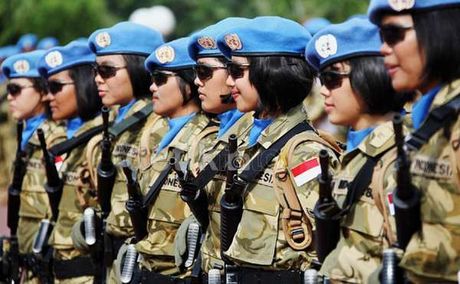
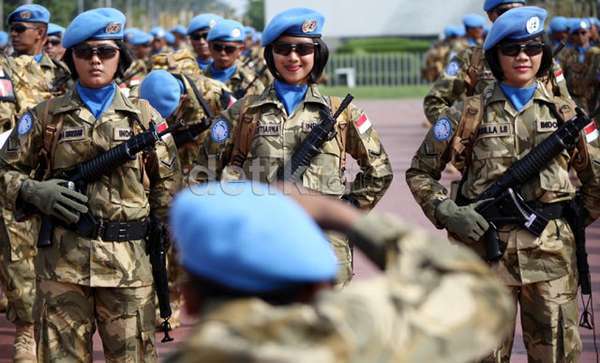
Hari ini Rabu (10/12/2014) Tentara Nasional Indonesia memberangkatkan 1.169 prajuritnya ke Lebanon untuk mengemban misi perdamaian dari Perserikatan Bangsa-Bangsa. Mereka akan terlibat dalam Satuan Tugas Kontingen Garuda (Konga) TNI United Nation Interim Force in Lebanon.
Ribuan prajurit yang akan diberangkatkan ke Lebanon itu pagi tadi berbaris rapi dalam posisi tegak di Mabes TNI Cilangkap, Jakarta Timur. Ada wajah-wajah ayu nan rupawan yang berbaris rapi sambil memegang senjata terselip di antara para tentara gagah perkasa itu.
Merekalah para tentara-tentara wanita yang akan turut serta dalam misi perdamaian PBB. Para Srikandi Indonesia itu akan mengemban misi yang tak ringan.
"Saya mengingatkan, kalian adalah duta TNI dan Bangsa Indonesia. Tampilkan kinerja dan performance terbaik. Tunjukkan TNI adalah pasukan kelas dunia. Bekali diri dengan pengetahuan tentang rules of engagement dan update semua informasi yang
terkait dengan otoritas UNIFIL sehingga dapat menilai situasi dan mengambil tindakan secara cepat, tepat dan proporsional khususnya situasi kemanan perbatasan Lebanon-Israel," kata Panglima TNI Jenderal Moeldoko yang melepas kontingen.
Para tentara tak hanya akan menghadapi ancaman isu penculikan yang kini menyebar di Lebanon, tapi juga wabah Ebola.
"Tetap waspada terhadap wabah Ebola karena wabah tersebut memiliki kecenderungan mudah berkembang di wilayah konflik," kata Moeldoko.
Kontingen Garuda ini bertugas sebagai peace keeper dalam misi perdamaian di Lebanon tersebut. Komandan Satuan Tugas Indonesia Batalyon (Indobat) pada kontingen ini dipimpin oleh Mayor Inf Andreas.
"Semua prajurit ingin bisa berangkat ke daerah operasi. Kalian mendapatkan hal itu, tunjukkan kalian bisa menjalankan tugas dengan baik. Do the best!" kata Moeldoko memberi semangat.
Selamat bertugas!
 The Abbott government revives the $8.5 billion Air Warfare Destroyer Programme, or AWD, to enhance wartime capabilities of the Royal Australian Navy. The government had also announced a three-point plan that will create a sustainable naval shipbuilding industry that supports shipbuilding jobs, Defence said in a statement.
The government's three-point plan includes working with the industry's best to revive the AWD programme, creating a sovereign submarine industry to avoid a submarine capability gap and creating a naval shipbuilding industry around a fleet of future frigates. The three-point plan is the government's way of showing that it is willing to invest for a safer and secure Australia.
The looming World War III had been widely reported since the annexation of Crimea by Russian President Vladimir Putin In March, with the Western countries imposing sanctions thereafter. Western countries said the annexation was illegal and had since displayed their hard stance against Russia. Russia's military presence had subsequently become alarming, with NATO intercepting Russian jets in unusual frequency.
The last major progress with the AWD project was announced in February 2014. On Dec 9, the Government announced it is reviving the project with an increased involvement with BAE Systems, Navantia SA and Raytheon Australia for an interim period. Their involvement shall ensure that immediate improvements in shipbuilding performance will come to pass.  The government said that major progress of the AWD project was halted due to growing cost and schedule overruns of the past administration. By implementing recommendations by Professor Donald Winter following his independent review of the project, the Abbott government is resolving outstanding productivity issues of the past administration.
"We are committed to working collaboratively and constructively with all stakeholders to ensure we realise both the critically important national security benefits of this program as well as its long term benefits for the Australian shipbuilding industry in the most efficient and effective way possible," Defence said in a statement.
The AWD is designed to protect personnel against missiles and other attacks launched by enemy aircraft. It will be equipped with the Aegis Weapon System with AN/SPY 1D(V) radar and SM-2 missile capable of hitting enemy aircraft and missiles at ranges in excess of 150 kilometres. The AWD will also carry a MH-60R Seahawk Romeo naval combat helicopter for surveillance across major warfare areas. AWD will also come equipped with long-range anti-ship missiles and a naval gun capable of firing extended range munitions to protect ground personnel. AWD, with its modern sonar systems, decoys and surface-launched torpedoes, will be able to conduct undersea warfare.
AWD Alliance CEO Rod Equid welcomes the Government's announcement with confidence. He said the alliance continue to uphold its mission of delivering the next generation AWD capability to the navy in order to protect Australia.Australia asks BAE Systems to help save destroyer project  BAE Systems and two other companies have been commissioned by the Australian government to help reform its foundering Air Warfare Destroyer program.
Under the agreement with the government, BAE Systems will provide experienced shipbuilders and executives from its Australian and global businesses to turn around the project for three Hobart-class destroyers, which is plagued by cost overruns and delays.
"The Australian Government has made it clear that turning this program around is critical to the future of Australian naval shipbuilding," said BAE Systems Australia's chief executive, David Allott. "We look forward to supporting the government by bringing our global complex shipbuilding capability to deliver this important goal, while standing ready to support any future needs the Commonwealth might have."
Working with BAE Systems on the rescue effort from now until next July are Spanish shipbuilder Navantia and Raytheon Australia.
According to Minister for Defense David Johnston, the $7 billion AWD project could be nearly $498 million over budget, and the construction of the first two ships is months behind schedule.
The destroyers are being built by the Air Warfare Destroyer Alliance, composed of the government's Defense Materiel Organization, the Australian Submarine Corporation, a government-owned entity and principle shipbuilder for the project, and Raytheon Australia.
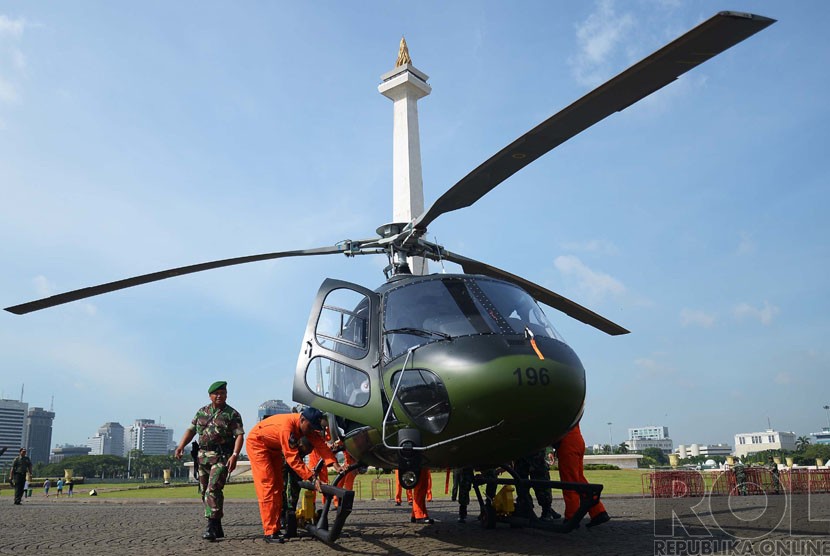
 Helikopter Fennec AS 350 B3E [ROL]
Satu unit helikopter Fennec AS 350 B3E milik Pusat Penerbangan Angkatan Darat (Puspenerbad) untuk pertama kalinya tampil di hadapan publik dalam Pameran Alat Utama Sistem Persenjatan (Alutsista) TNI AD di Monumen Nasional, Jakarta, 12-15 Desember 2014.
Helikopter ringan produksi Airbus Helicopter -sebelumnya bernama Eurocopter- itu merupakan unit pertama dari 12 yang dipesan oleh TNI AD yang dijadwalkan datang secara bertahap hingga 2016 nanti, enam di antaranya bermesin tunggal dan enam lainnya bermesin ganda.
Hal itu disampaikan Kepala Sub Direktorat Penerangan Umum TNI AD Kolonel Zaenal Muttaqin di lokasi pameran, Jumat.
"Salah satu yang berbeda dari pameran tahun lalu, kali ini di stan Puspenerbad sudah ada satu unit helikopter Fennec," katanya.
Kehadiran Fennec ditampilkan dalam Pameran Alutsista TNI AD 2014 tersebut juga disambut baik oleh para pengunjung.
Salah satunya, Fathurrahmaan (29), yang mengaku sebagai penggemar kendaraan tempur.
"Saya sempat dengar juga kalau Fennec sudah datang November lalu, lumayan bisa lihat heli yang masih segar," kata pria yang sehari-harinya bekerja di kawasan Sudirman tersebut.
Fennec AS 350 B3E merupakan helikopter ringan produksi Airbus Helicopter yang bermesinkan Turbomeca Arriel 2B dengan daya setara 947 kekuatan kuda (HP) dan memiliki kecepatan maksimum 297 km/jam serta kecepatan jelajah hingga 245 km/jam.
Selain Fennec AS 350 B3E, Puspenerbad juga menampilkan lima unit helikopter lainnya yakni satu unit heli Bolco 105 buatan Jerman, heli serbu NBEL412 dan heli serbu BELL 205 A1 buatan AS, dan heli serang MI-35 dan heli serbu MI-17 V5 buatan Rusia.
Keenam heli tersebut hanya sebagian dari sedikitnya 200 jenis peralatan tempur yang dipamerkan dalam Pameran Alutsista AD 2014.
 Analysts say Indonesia’s military and defense sector needs more investment to bring on par with neighboring countries. The spending is needed most for modernizing weaponry and improving the welfare of military personnel. (Antara Photo/Rosa Panggabean)
The new government’s plan to bolster the country’s defense spending to almost triple its current budget by 2019 has received support from international relations analysts and military experts in Indonesia.
Luhut Panjaitan, an adviser to President Joko Widodo, said on Tuesday that Indonesia’s defense spending was targeted to increase to 1.5 percent of gross domestic product over the next five years in order to protect the country’s sovereignty and national interests.
“We link to economic growth of about 7 percent … so by 2019, the national defense budget can increase to around $20 billion per annum,” Luhut said, as reported by Reuters on Wednesday.
Muradi, a defense and military analyst at Padjadjaran University in Bandung, West Java, agreed with the country’s plan to set such an impressive target for its defense and security sector, saying that “our defense sector is already 10 years behind neighboring countries such as Singapore and Malaysia.”
According to Muradi, Indonesia’s defense sector spending — which includes the purchase of primary weaponry defense systems, the cost of security monitoring and also stipends for military personnel — should make up at least 2 percent of the country’s GDP to be considered adequate.
This year, Indonesia has allocated Rp 83 trillion ($6.6 billion), which represents 0.8 percent of the total state budget, Defense Minister Ryamizard Ryacudu said early last month.
“As of now, I believe there’s no other way to modernize our weaponry except for increasing the defense sector budget,” Muradi told the Jakarta Globe on Wednesday.
“We can’t let other parties help us [with providing weaponry] because that way they are likely to dictate to us [on how to manage the country’s defense and security].”
Meanwhile, a nation’s moves to increase military and defense sector spending often set off alarms in neighboring countries — in Indonesia’s case, it includes Australia and members of the Association of Southeast Asian Nations (Asean). They may see such a policy as a threat.
Deterrent effect
But international relations experts believe Indonesia’s move to beef up its security, by setting aside more money for defense in its state budget, is essentially based on its need to improve its defensive capabilities and security systems in order deter any potential aggressors.
“By beefing up security in its territory, Indonesia is sending a warning to other countries that may possibly be planning acts of aggression against it. It shows that they can no longer do whatever they like and think that we wouldn’t be able take decisive action against them,” Muradi said.
According to Muradi, Indonesia records some 200 violations to its airspace per year.
“For instance, just to challenge the most recent violation by three foreign aircraft, we spent some Rp 150 million, while we only fined them some Rp 60 million,” Muradi said.
“The increase is really needed, not because Indonesia is worried that there would be attacks from other countries, but more due to its internal interests,” Hikmahanto Juwana, an international relations expert from the University of Indonesia, told the Jakarta Globe on Wednesday.
Hikmahanto says that the increase in defense spending is needed: to protect the country from illegal actions by private groups; to be a peace broker in any disputes occurring in the region; and also to boost Indonesia’s participation in United Nations peace-keeping efforts.
“Indonesia also requires adequate weapons systems to protect its territory as it has the second-longest coastline in the world, which eventually is in line with Jokowi’s agenda to be a Global Maritime Fulcrum,” said Djayadi Hanan, an academic in Paramadina University’s department of international relations.
Muradi further pointed out that increased defense spending was also needed to improve the welfare of personnel in the country’s armed forces aside from buying more weaponry.
To avoid any misinterpretations by its neighbors, foreign policy experts also say that Indonesia would have to explain and clearly outline the reasons behind its plan to increase its defense spending.
“Increasing the military budget could make other countries worry and if it’s not explained in a very clear and diplomatic way, it could be dangerous,” Hikmahanto said.
“Therefore, Indonesia must be able to justify clearly in its white paper on defense its reasons for the need to increase the spending.
“[For other countries] the move should not mean that Indonesia is planning to start a war or any aggressive actions, but that it’s basically meant to fulfill minimum essential force requirements,” Djayadi says.
“Indonesia’s move to strengthen its defense sector could boost stability in the Southeast Asia region,” Djayadi adds.
“Furthermore, Indonesia could also then start taking part in maintaining security in the region that will eventually improve defense and security for all countries.”
Hikmahanto pointed out that Indonesia would also need to show that its foreign policy had shifted to “all nations are friends until Indonesia’s sovereignty is degraded and national interest is jeopardized.”
 PM Thatcher